Finding an old coin in a drawer can feel a little like holding a secret. It might be a humble copper with a worn face, or a quietly spectacular silver piece that whispers “worth a look.” Before you get carried away imagining auction-room glory (or plotting the perfect estate sale score), take a breath. Valuing coins is a mix of detective work app para identificar moedas grátis, reference checking, and knowing when to call in an expert. This guide walks you through that process in plain language, with practical tools, red flags, and realistic next steps.
First Things First: Handle with Care and Gather Basic Tools
Never scrub, polish, or dip an old coin. Cleaning can destroy surface details and slash a coin’s value faster than any scratch. Instead, work with gloves or clean hands, and use soft surfaces to avoid accidental dings. Here are the simple tools that make the rest of the job much easier.
| Tool | Purpose |
|---|---|
| Soft cotton gloves or lint-free fingers | Prevent oils and scratches |
| 10x loupe or magnifying glass | Examine details, mint marks, and wear |
| Digital calipers and scale | Measure diameter and weight for authentication |
| Soft brush and gentle blower | Remove dust without altering surfaces |
| Notebook or phone camera | Record photos and notes for reference |
Step 1 — Identify the Coin
Start by reading what’s on the coin: country, date, denomination, and any mint marks (small letters indicating where the coin was struck). Don’t assume the date is the whole story—die varieties and mintmarks can change values dramatically. Photograph both sides, the rim, and any unusual marks. Those images will be invaluable when you consult catalogs or forums.
Quick identification checklist
- Read the date and mint mark; note wear that obscures them.
- Record diameter and weight—these help spot counterfeits.
- Look for design details, edge reeding, or edge lettering.
- Note metal color and any obvious corrosion or toning.
Step 2 — Use Good References
Once you know what the coin is, consult authoritative references. For U.S. coins, the Red Book (A Guide Book of United States Coins) is a classic price guide. For world coins, Krause’s Standard Catalog is widely used. Online resources are fast and often free: Numista for world coins, NGC and PCGS for specialist currency, and CoinArchives for past auction results. Crucially, use “sold” listings—what buyers actually paid—rather than asking prices.
Reliable online places to check sold prices
- eBay sold listings (filter for “sold”): a practical market snapshot
- NGC and PCGS price guides and auction archives
- Heritage and Stack’s Bowers auction archives for high-end sales
- Numista and CoinArchives for comparative images and provenance
Step 3 — Learn the Grading Basics
Grading describes a coin’s condition, and condition is king. The Sheldon scale (1–70) is the standard: 1 is effectively a worn coin, 70 is a perfect, untouched mint state. You don’t need to be a certified grader to get a reasonable sense of condition. Look at high points of the design—if details there are flattened, the coin has significant wear. Luster, strike, and surface marks matter too. A well-struck coin with nice luster can be worth much more than a higher-grade, improperly struck example.
| Grade | Short Description |
|---|---|
| P–G (1–4) | Heavy wear; date and legend may be faint |
| VG–F (8–12) | Moderate wear; major devices visible |
| VF–EF (20–40) | Light to moderate wear; good detail |
| AU (45–58) | Almost uncirculated; traces of wear on the highest points |
| MS (60–70) | Mint state; no wear. Higher numbers = fewer marks, better eye appeal |
Step 4 — Consider Rarity and Varieties
Value doesn’t come from condition alone. A common coin in mint state might be worth a few dollars, while a scarce date or a rare die variety can multiply value many times. Look for varieties: doubled dies, repunched mintmarks, off-center strikes, and unique planchet errors. Limited mintage, historical relevance (e.g., an emergency issue or a coin tied to a specific event), and documented provenance also lift value. Use specialist catalogs or forums to look for known varieties of your exact year and mint.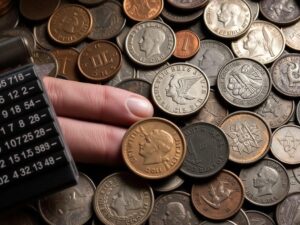
Factors that increase a coin’s rarity value
- Low mintage and survivors
- Known die errors or famous varieties
- Striking anomalies (double die, off-center, broadstrike)
- Historical connection or celebrity provenance
Step 5 — Check Metal Content and Spot Prices
For coins made from precious metals, intrinsic metal value matters. U.S. silver coins minted through 1964 contain 90% silver; many modern commemoratives have known fineness. For gold coins, weight and karat determine melt value. Compare weight-based intrinsic value to collector value. Often, collector interest makes the numismatic price exceed metal value, but when a coin is common and heavily worn, its melt value can become the floor.
How to quickly assess metal-based value
- Confirm weight and diameter against official specs.
- Check current spot price for silver or gold.
- Calculate melt value: (weight × fineness × spot price).
- Compare to recent auction results for similar-condition coins.
Step 6 — Watch Out for Fakes and Alterations
Counterfeits are an unpleasant reality, especially for high-value pieces. Simple red flags include inconsistent weight, wrong diameter, magnetic attraction on supposed silver or gold, odd-looking edges, or unusually sharp detail on otherwise worn coins. Some fakes are sophisticated—clad cores with plated surfaces, or altered dates and mintmarks. If a coin could be valuable, get it professionally examined. Reputable third-party grading services (PCGS, NGC) offer authentication and encapsulation, which can boost buyer confidence and often improve resale value.
Practical red flags checklist
- Weight and size don’t match catalog specs.
- Magnetic behavior on silver/gold coins.
- Tool marks near mintmarks or date (signs of alteration).
- Unnatural or inconsistent toning that seems painted on.
Step 7 — Decide Whether to Grade Professionally
Grading services authenticate and assign an official grade. Slabbed coins often fetch better prices because buyers trust the grade and authenticity. But grading costs money—submission fees, return shipping, and potential resale exposure. For low-value coins, professional grading is rarely cost-effective. For rare dates, high-grade examples, or coins with potential for significant appreciation, grading can pay off. Ask local dealers or auction houses for an estimate before submitting a coin for grading.
Step 8 — Where to Sell or Appraise
Once you have a rough value, choose the best channel for selling. Options include selling to local coin dealers, listing on online marketplaces, consigning to auction, or using specialty dealers for rare pieces. Each has trade-offs: dealers offer convenience and immediate cash but buy at wholesale prices. Online sales may fetch retail prices but require good photos, accurate descriptions, and patience. Auctions—especially reputable numismatic houses—are ideal for rarities and high-end coins.
| Channel | Best for | Drawbacks |
|---|---|---|
| Local coin dealer | Quick sales, small collections | Lower price than retail |
| Online marketplaces (eBay) | Broad audience, control over listing | Fees, shipping risks, time investment |
| Auction houses | Rare, high-value coins | Commissions and consignment timelines |
| Third-party grading + sale | Maximizes trust and value for rare pieces | Upfront fees and waiting period |
Practical Example: A Quick Walk-Through
Imagine you find a silver dollar dated 1921 with a mintmark. You’d first note the mintmark and photograph both sides. Weigh and measure it to ensure it’s close to known specs (a genuine 1921 silver dollar has specific weight and diameter). Check references: Red Book or PCGS online for mintage, typical values by grade, and known varieties. Inspect the highest points for wear, and compare to graded photos online. Search sold listings for “1921 [mintmark] dollar sold” and narrow by grade or eye appeal. If it looks rare or the market prices are high, consider third-party grading or a professional appraisal before selling.
Checklist before selling
- Photographs of both sides, closeups of mintmark and date
- Weight and diameter measurements
- Reference comparison and recent sold prices
- Decision on grading vs. direct sale
Common Mistakes to Avoid
Don’t rush to clean; don’t accept the first low offer without a quick market check; don’t assume rarity without consulting catalogs or auction records; and don’t try risky tests at home that could damage the coin. Emotional selling—taking the first high-sounding offer—is tempting. Pause, compare prices, and if you suspect real value, get a second opinion from a reputable dealer or auction house.
Resources and Further Reading
Build a small library of trusted resources as you grow more serious: the Red Book for U.S. coins, Krause for world coins, PCGS and NGC online guides for authentication and price trends. Join focused forums and local coin clubs where experienced collectors can point out details you might miss. And keep a running file of sold auction results—real sales beat hypothetical price lists every time.
Conclusion
Checking the value of old coins is methodical work: identify, document, compare, and—when warranted—authenticate. With a few basic tools, good references, and patience, you can separate the ordinary from the noteworthy and make informed decisions about grading or selling. Above all, handle coins gently, avoid quick fixes like cleaning, and call in professionals for anything that could be truly valuable. The payoff is not only money but the quiet satisfaction of knowing the true story behind the metal in your hand.